
Understanding Dementia: A Guide for Families and Caregivers
This resource was developed by Kelly Price Noble, DHA, MAOM, CRCFEA, CSA®, founder of KAPN Consulting: Innovative Solutions, to help families and caregivers understand what dementia is, how it presents, and what to expect as the condition progresses.
Clinical information on this page reflects current guidance from the American Psychiatric Association's DSM-5 and the Mayo Clinic. This page is intended for educational purposes and does not constitute medical advice.
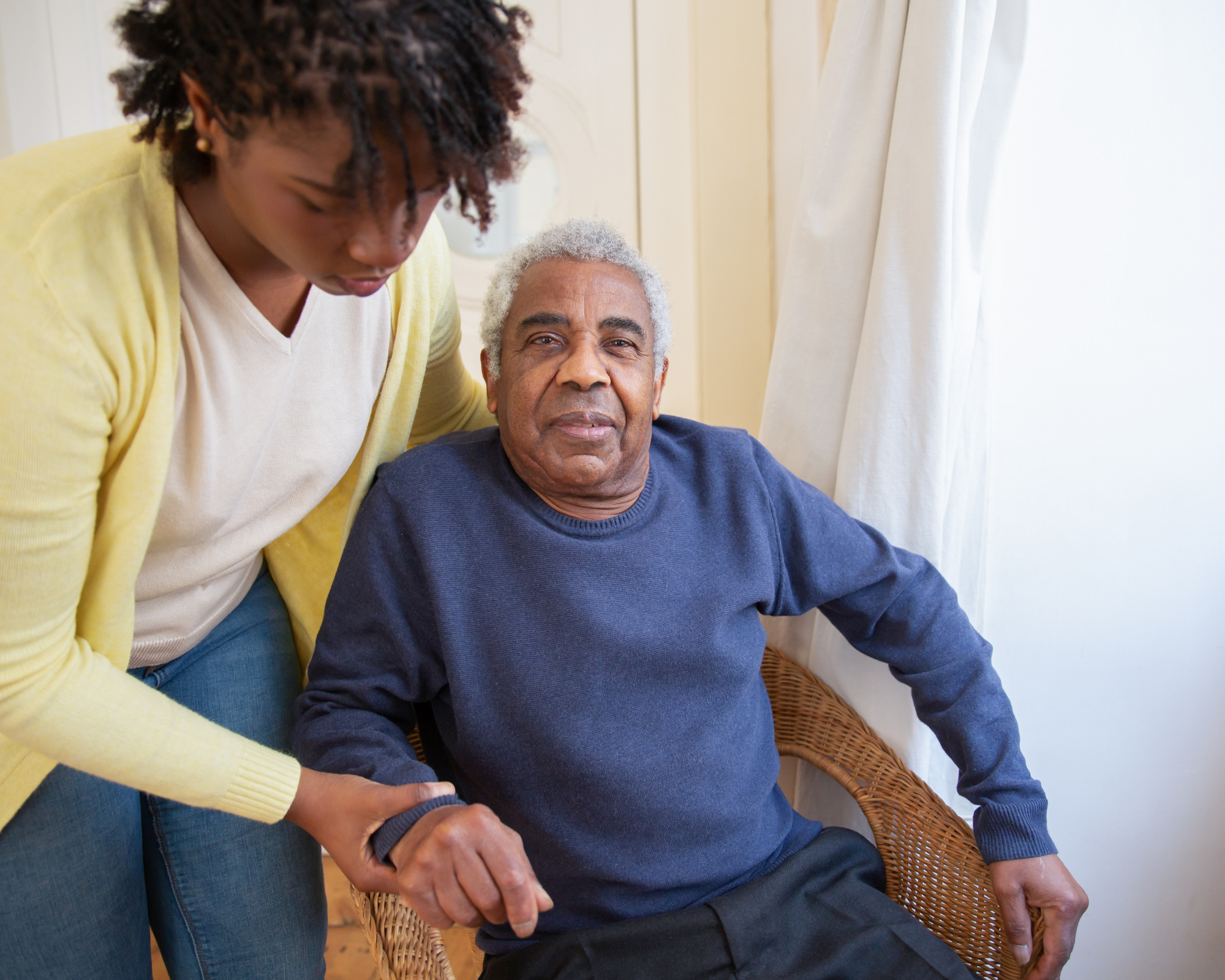
What Is Dementia?
Dementia is not one specific disease. The term describes a group of symptoms that affect memory, thinking, and social abilities severely enough to interfere with daily life. Several different diseases can cause dementia — Alzheimer's disease being the most common — and each follows its own progression (Mayo Clinic, 2025).
For families, this distinction matters. A diagnosis of dementia is not a single, fixed event with a predictable path. It is the beginning of a process that unfolds differently for every person, shaped by the specific disease involved, the individual's overall health, and the quality of care and support surrounding them.
Understanding what dementia looks like — cognitively, behaviorally, and emotionally — is one of the most useful things a family caregiver can do. Knowledge does not eliminate the difficulty, but it does replace fear with something more workable: the ability to recognize what is happening, respond with patience, and make informed decisions along the way.

How Dementia Is Assessed: The Six Cognitive Domains
When clinicians assess for dementia, they evaluate functioning across six key cognitive domains identified by the American Psychiatric Association in the DSM-5. Understanding these domains helps families recognize early signs and communicate more effectively with healthcare providers.
Complex Attention
Complex attention encompasses the ability to focus on multiple things simultaneously, select what to pay attention to, and sustain that focus over time. A person experiencing decline in this area may struggle to follow a conversation when there is background noise, lose track of tasks mid-process, or become easily distracted in environments that would not previously have posed a challenge.
Executive Function
Executive function refers to higher-level cognitive abilities that plan, coordinate, and regulate other cognitive processes and behaviors. This includes decision-making, problem-solving, and the ability to sequence steps in a task. Decline in executive function often appears as difficulty managing finances, following multi-step instructions, or making decisions that previously felt routine.
Learning and Memory
This domain encompasses the ability to take in new information, retain it, and retrieve it when needed. Memory loss associated with dementia is typically noticed first by someone close to the individual — a spouse, an adult child, a close friend — before the person experiencing it becomes fully aware of the change.
Language
The language domain covers all aspects of communication — speaking, writing, reading, and understanding. A person experiencing language decline may struggle to find the right word mid-sentence, repeat questions or stories without awareness of having already shared them, or have difficulty following spoken or written instructions.
Perceptual-Motor Function
This domain encompasses the coordination of body movement in response to the surrounding environment, including visual-spatial processing and motor skills. Decline in this area may present as difficulty navigating familiar spaces, trouble judging distances, or a loss of coordination in tasks that once required no conscious effort.
Social Cognition
Social cognition refers to how a person processes, interprets, and uses social information — reading the emotions of others, understanding social norms, and regulating behavior in interpersonal contexts. Changes in this domain can be among the most disorienting for families, as the person may say or do things that seem entirely out of character.

Cognitive Changes Associated With Dementia
As dementia progresses, cognitive changes become more pronounced and more disruptive to daily life. The following changes are among the most commonly reported by caregivers and clinicians (Mayo Clinic, 2025):
Memory loss, often first noticed by someone other than the individual experiencing it
Difficulty communicating or finding words mid-conversation
Trouble with visual and spatial tasks, such as becoming lost in a familiar neighborhood
Problems with reasoning or problem-solving that previously posed no difficulty
Difficulty performing tasks that require multiple steps
Trouble with planning and organizing
Reduced coordination and motor control
Confusion and disorientation, particularly in unfamiliar environments or at certain times of day
No two people with dementia will experience all of these changes, or experience them in the same order or at the same pace. Caregivers who understand what is possible are better equipped to respond with patience when something unexpected arises.

Psychological Changes Associated With Dementia
Dementia affects more than cognition. Psychological and behavioral changes are a significant part of the experience — for the person living with the condition and for the family surrounding them. Common psychological changes include (Mayo Clinic, 2025):
Personality changes that may feel abrupt or significant
Depression
Anxiety
Agitation
Behavior that seems inappropriate for the social context
Suspiciousness or paranoia
Hallucinations — seeing or hearing things that are not present
These changes are not willful. They are symptoms of neurological change, and responding to them as such — rather than as deliberate behavior — is one of the most important shifts a family caregiver can make. Support from a knowledgeable consultant or care team can make an enormous difference in how families navigate this dimension of the disease.

What Is Anosognosia?
One of the more difficult aspects of dementia for families to understand is anosognosia — a neurological condition in which the individual is genuinely unaware of their own cognitive decline or diagnosis. Anosognosia is not denial. The person is not choosing to ignore what is happening. The neurological damage affecting their cognition is the same damage that impairs their ability to perceive that decline.
This distinction has profound implications for caregiving. A person with anosognosia may resist help, argue against a diagnosis they cannot perceive as accurate, or become frustrated with family members who are responding to a reality they cannot see. Understanding the neurological basis of this lack of awareness helps caregivers respond with compassion rather than frustration.

What Is Sundowning?
Sundowning refers to a pattern of increased confusion, agitation, or behavioral change that occurs during the late afternoon and evening hours in some individuals with dementia or Alzheimer's disease. The name reflects the timing — as the day winds down, symptoms that may be relatively managed during daylight hours can intensify significantly.
Sundowning may present as restlessness, irritability, increased confusion about time or place, or behaviors that are difficult to redirect. The causes are not entirely understood, but fatigue, changes in light, and the disruption of the body's internal clock are all thought to play a role.
For caregivers, the late afternoon and evening can become the most demanding part of the day. Establishing consistent routines, reducing stimulation in the environment as the day progresses, and ensuring the person has adequate rest earlier in the day can all help. When sundowning is severe or significantly impacting the safety of the person in care, consultation with a medical provider is appropriate.

What Is Agitation and Aggression in Dementia?
Agitation and aggression are common behavioral symptoms in older adults with dementia or Alzheimer's disease. These behaviors may present as restlessness, verbal outbursts, resistance to care, or in some cases physical aggression. They are rarely a reflection of the person's character — they are most often a communication of unmet need, discomfort, fear, or confusion.
The causes of agitation and aggression in dementia are multifaceted. Pain, infection, medication side effects, environmental overstimulation, and disruptions in routine can all contribute. Identifying the underlying trigger — rather than simply managing the behavior — is the most effective and humane approach. A care consultant or clinical team member can help families develop strategies tailored to the specific individual and situation.

You Do Not Have to Navigate This Alone
Understanding the clinical picture is one part of caring for someone with dementia. The daily reality — the conversations, the decisions, the emotional weight — is another. Kelly Price Noble, DHA, MAOM, CRCFEA, CSA® offers assessment and care planning, emotional support consulting, and advocacy services specifically designed for families navigating exactly this.
If you are in the middle of this and looking for a steady, knowledgeable voice to help you find the path forward — schedule a consultation with Kelly.
Or explore A Mindfulness Journey: Caring for an Aging Population for a deeper look at the caregiving journey through the lens of mindfulness and lived experience.
Frequently Asked Questions
-
Alzheimer's disease is the most common cause of dementia, but dementia itself is not a single disease — it is a term describing a group of symptoms affecting memory, thinking, and social function. Other diseases, including Lewy body dementia, vascular dementia, and frontotemporal dementia, can also cause dementia symptoms. A formal diagnosis from a physician or specialist identifies the underlying cause.
-
Early signs often include memory loss noticed by others before the individual themselves, difficulty finding words, trouble with familiar tasks, and subtle shifts in personality or judgment. If you are noticing these changes in a parent or loved one, a conversation with a primary care physician is a reasonable first step, followed by a referral to a specialist if warranted.
-
Anosognosia is a neurological condition in which the person with dementia is genuinely unaware of their cognitive decline. This is distinct from denial — it is a symptom of the disease itself. Caregivers working with someone who has anosognosia often face significant challenges around consent to care, resistance to help, and conflict rooted in a perception gap that cannot be resolved through conversation alone.
-
The exact causes of sundowning are not fully understood, but fatigue, changes in light, and disruption of the body's internal clock are contributing factors. Consistent daily routines, reduced stimulation in the late afternoon, adequate daytime rest, and a calm evening environment can all help. Severe sundowning warrants a conversation with the person's medical team.
-
A palliative care consultant can help families understand the progression of dementia, develop a care plan that reflects the values and wishes of the person in care, navigate difficult conversations with medical teams, and access community resources and support services. Kelly Price Noble, DHA, MAOM, CRCFEA, CSA is available for consultation for families at any stage of the dementia caregiving journey.

References
American Psychiatric Association. (2013). Diagnostic and statistical manual of mental disorders (5th ed.). American Psychiatric Publishing.
Mayo Clinic. (2025). Dementia. https://www.mayoclinic.org/diseases-conditions/dementia/symptoms-causes/syc-20352013