Taking Care of Elderly Parents: Quotes for the Caregivers Who Need to Hear Them
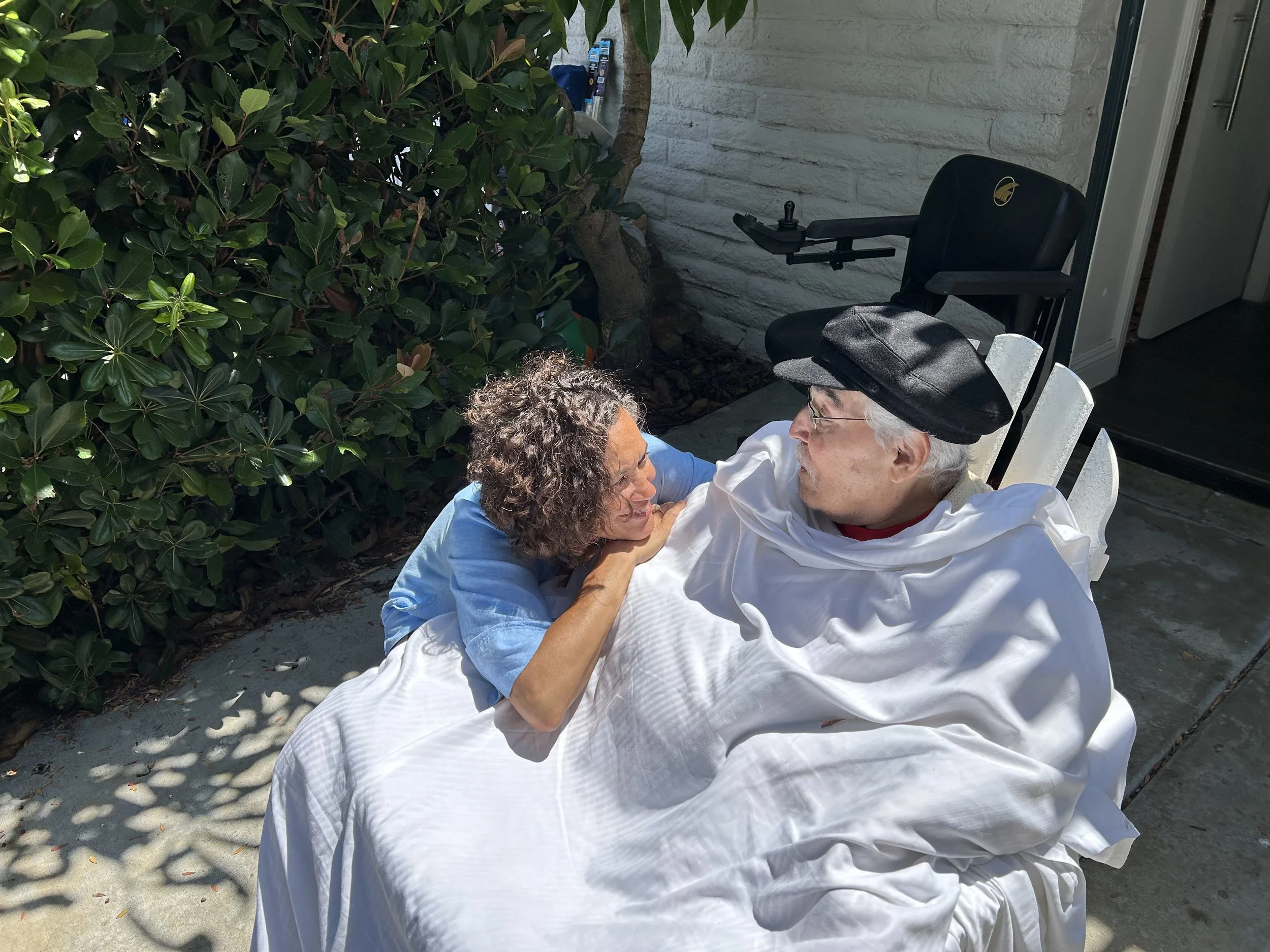
In this post, Kelly Price Noble, DHA, MAOM, CRCFEA, CSA® — palliative care consultant, advance care planning specialist, and founder of KAPN Consulting: Innovative Solutions — shares a curated collection of quotes on taking care of elderly parents, each one chosen for what it offers the caregiver who is quietly carrying more than most people around them realize.
Some days the most useful thing is not a strategy or a checklist. Some days what a caregiver needs is a sentence — the right one, at the right moment — that makes them feel less alone in what they are carrying.
The quotes collected here were chosen for exactly that purpose. They come from writers, clinicians, philosophers, and caregivers themselves. Some speak to the love at the center of this work. Some speak to the difficulty. Some speak to both simultaneously — which is, of course, where most caregivers actually live.
Read slowly. Save what resonates. Return when you need it.
On the Love at the Center of Caregiving
"Caregiving often calls us to lean into love we didn't know possible." — Unknown
There is a particular quality of love that caregiving produces — not the uncomplicated love of early relationship but something tested, deepened, and made more conscious through difficulty. Most caregivers discover a capacity in themselves they did not know existed before the role demanded it.
"To care for those who once cared for us is one of the highest honors." — Tia Walker
The reversal of roles — becoming the one who tends, protects, and advocates for a parent who once did those things for you — carries a weight and a significance that few other life experiences match. Honoring that significance, rather than treating it as simply a logistical challenge, changes the experience of the role.
"Caregiving can challenge you in ways you never expected, yet it also deepens your capacity to love." — Kelly Price Noble, DHA, MAOM, CRCFEA, CSA®
Kelly wrote these words from personal experience — having traveled monthly from California to Maryland beginning in 2020 to care for her aging parents. The challenge and the deepening are not separate. They arrive together, and the love that survives the difficulty is richer for having been tested.
On the Difficulty of the Role
"Caregiving has no days off." — Unknown
The relentlessness of caregiving is one of its least acknowledged dimensions. There are no true breaks in the way that most demanding work allows for breaks. Even time away from the physical role is often accompanied by worry, planning, and the low hum of sustained responsibility. Naming this honestly — without apology — is the first step toward addressing it.
"You can't pour from an empty cup. Take care of yourself first." — Unknown
This is perhaps the most widely shared caregiving sentiment — and the most consistently ignored. Not because caregivers disagree with it but because the conditions of the role make acting on it feel impossible. The truth embedded in these words is not a judgment. It is an invitation to take the caregiver's needs as seriously as the parent's.
"Family caregiving is a marathon, not a sprint. Pace yourself accordingly." — Unknown
The caregivers most at risk of burnout are often those who bring a sprint mentality to a role that requires sustained endurance. The pace set in the early months — the level of involvement, the frequency of check-ins, the degree to which the caregiver's own life has been set aside — is rarely sustainable over years. Understanding how caregiver stress compounds over time is essential reading for anyone early in the role.
On Presence and Meaning
"At the end of life, what matters most is not what we accomplished but how well we loved." — Unknown
The decisions and the logistics and the care plans all matter. And underneath all of them, what the person in care most needs — and what most caregivers most want to offer — is presence. The feeling of being accompanied. Of not being alone in the hardest chapter.
"Sometimes the most important thing in a whole day is the rest taken between two deep breaths." — Etty Hillesum
For caregivers managing full lives alongside full caregiving responsibilities, the invitation to rest — even briefly, even imperfectly — is countercultural and necessary. The space between two breaths is not nothing. It is where steadiness lives.
"To remind them they are not alone, and even in the hardest moments, there is grace to be found." — Kelly Price Noble, DHA, MAOM, CRCFEA, CSA®
This is the through line of Kelly's entire body of work — the belief that accompaniment matters, that presence is a form of care, and that grace is available even in circumstances that seem to leave no room for it. It applies as much to the caregiver as to the person being cared for.
On Honoring the Parent
"Aging is not lost youth but a new stage of opportunity and strength." — Betty Friedan
The cultural tendency to treat aging as decline alone — as a diminishment rather than a chapter with its own texture and meaning — does a disservice to both the aging person and the caregiver. Holding the aging parent's continued personhood, dignity, and capacity for meaning alongside their declining function is one of the most important things a caregiver can do.
"The way we treat our elderly reflects the values of our society." — Unknown
Caregiving is not only a private act. It is a reflection of what a family, a community, and a culture believes about the value of human life at every stage. The caregiver who shows up consistently, who advocates, who ensures that an aging parent is treated with dignity — that person is doing something that matters far beyond the walls of any one home.
On Asking for Help
"Asking for help is not a sign of weakness. It is a sign of wisdom." — Unknown
Most caregivers arrive at asking for help only after pushing past the point where asking would have been easier. The belief that needing support means failing at the role is one of the most persistent and damaging misconceptions in caregiving. Wisdom recognizes limits. Wisdom asks. Kelly is available for consultations for caregivers who are ready to ask.
"We do not have to do all of it alone. We were never meant to." — Unknown
The isolation of caregiving is not inevitable — it is a product of inadequate support systems and a cultural story that frames asking for help as failure. The caregivers who sustain the role most successfully are almost always those who have found their people — professionals, peers, or both — who understand what they are carrying. If you have been feeling trapped in the caregiving role, this is worth reading.
On Grief and Loss
"Grief is the price we pay for love." — Queen Elizabeth II
The losses embedded in caring for an aging parent arrive before the final loss — in every declined capacity, every changed dynamic, every moment when the parent is present and somehow also already retreating. Acknowledging this grief — naming it, making space for it — does not diminish the caregiving. It makes the caregiver more whole.
"What we have once enjoyed we can never lose. All that we love deeply becomes a part of us." — Helen Keller
The relationship being transformed by aging and illness is not being erased. The love, the history, the specific texture of what this particular parent and child have been to one another — that does not diminish with decline. It changes shape. It does not disappear.
A Final Word
Taking care of elderly parents is one of the most profound things a person can do — and one of the loneliest, if the people surrounding the caregiver do not fully understand the weight of what is being carried.
If even one of these quotes offered a moment of recognition — the feeling that someone, somewhere, understood what this is like — then this post has done what it was meant to do.
You are not alone in this. The work you are doing matters. And if you need more than a quote today — if what you need is a conversation, a plan, or simply someone who can help you see a path forward — Kelly is here.
Frequently Asked Questions
-
The most meaningful quotes for caregivers of elderly parents tend to reflect both the difficulty and the depth of the role — acknowledging the exhaustion honestly while also honoring the love and significance at the center of the work. The collection above was curated by Kelly Price Noble, DHA, MAOM, CRCFEA, CSA specifically for family caregivers navigating this experience.
-
Yes. Several quotes in this collection address the relentlessness and emotional weight of the caregiving role directly. For a deeper exploration of caregiver stress and what helps address it, this post on the stress of caring for elderly parents covers the topic in full.
-
The most meaningful thing to say to a caregiver is often the simplest: that what they are doing matters, that they are not alone, and that their needs count as much as the needs of the person they are caring for. Practical offers of specific help — not general offers to "let me know if you need anything" — are also deeply valuable.
-
Meaning in caregiving tends to be found in presence rather than in outcomes — in the quality of attention brought to small moments rather than in the resolution of large challenges. Kelly Price Noble, DHA, MAOM, CRCFEA, CSA explores this theme throughout her book A Mindfulness Journey: Caring for an Aging Population, which offers a mindfulness-based framework for finding meaning across the full arc of the caregiving experience.
-
Support is available through professional consulting, caregiver support groups, and resources such as the complete guide to caring for elderly parents on the KAPN Consulting blog. The free caregiver burnout quiz is also a useful starting point for caregivers assessing where they are and what kind of support might help most.
About the Author
Kelly Price Noble, DHA, MAOM, CRCFEA, CSA® is the founder and CEO of KAPN Consulting: Innovative Solutions, a palliative care consultant, advance care planning specialist, and author of A Mindfulness Journey: Caring for an Aging Population. She supports caregivers, families, and healthcare organizations navigating aging, serious illness, and end-of-life care with clarity, compassion, and ethical grounding.
Ready to take the next step? Take the free caregiver burnout quiz to find out where you are and what kind of support might help most. Or schedule a consultation to speak with Kelly directly.
Explore related reading: